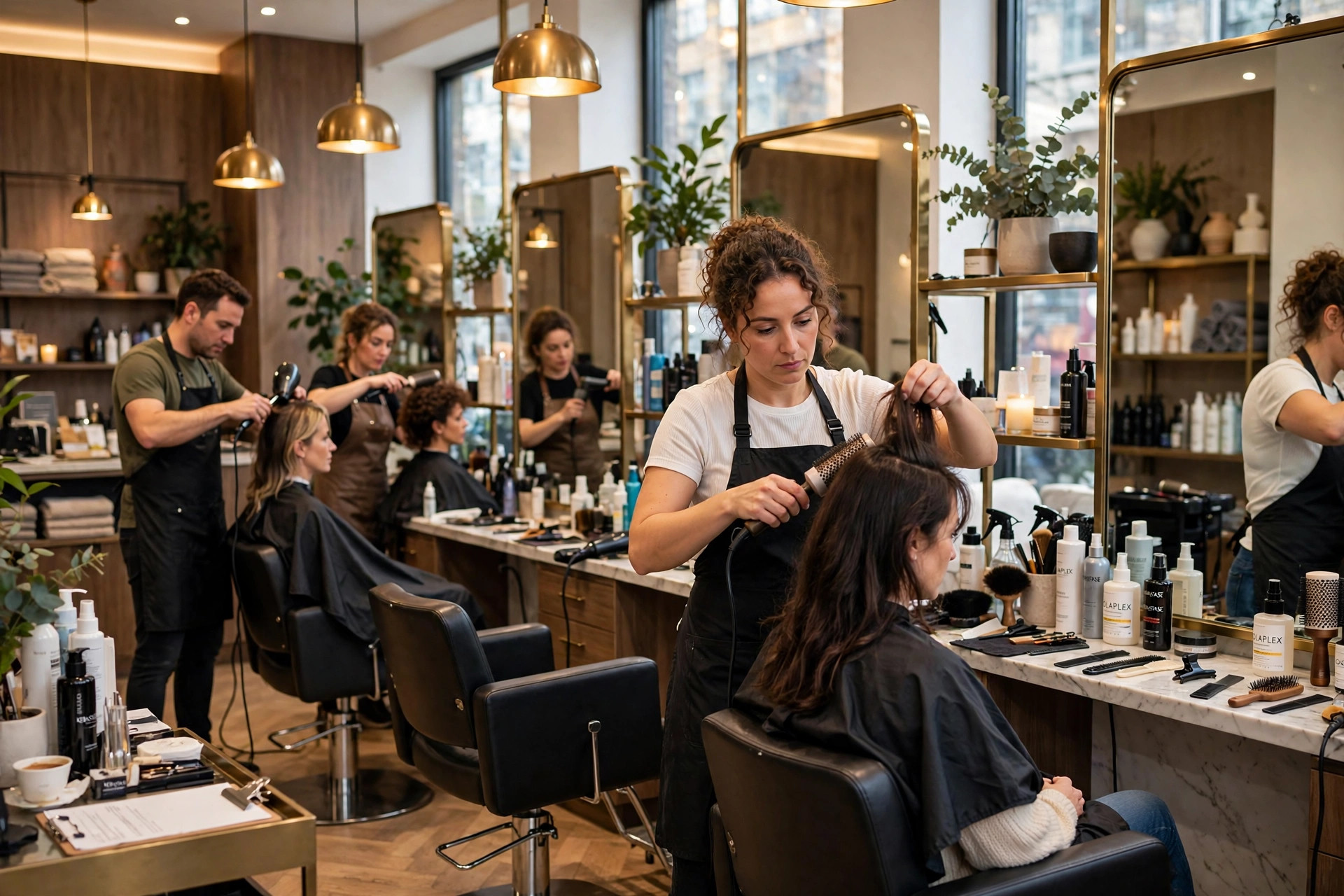
A salon sells time. A chair, a station, and a booked stylist turn into deposits; an empty chair turns into nothing. The margins are thinner than they look from the street — rent, product, and payroll eat most of what the appointment book brings in — but the revenue is real, daily, and verifiable. Underwriters like that more than most business owners expect.
The cash-flow shape is what it is. The buildout, the chairs, and the lease deposit all cost money before the first client sits down — and the slow season arrives on schedule every year while rent and payroll do not pause. This guide covers where salon and spa money actually goes, which products fit each need, and the qualification reality behind the marketing.
Where the money actually goes in a beauty business
Chair and station buildouts. Styling chairs, shampoo bowls, mirrors, lighting, reception, plumbing — a five-chair buildout is the single biggest capital outlay most salons make, and it lands before revenue exists. This is the one use where a term loan with a defined payback period usually beats daily or revolving products, because the cost is fixed and the payback has a plan.
Lease deposits and rent timing. Prime salon locations demand deposits and sometimes months of prepaid rent. That money is dead capital from day one — it earns nothing — so financing it beats draining the operating account right before opening.
Retail and professional inventory. The shelves sell at retail margins and the backbar feeds the services, but inventory is a permanent working-capital drag: money sitting in bottles instead of in the account. Restocks, seasonal launches, and new lines all draw from the same float, which is exactly what a line of credit is shaped for.
Stylist and barber payroll. Good stylists are the industry's scarcest resource, and chair renters leave while W-2 staff expect pay on the slow weeks too. Funding that keeps payroll whole through the seasonal dips — while the book rebuilds — is one of the highest-ROI uses of capital in this business.
Equipment: chairs, shampoo bowls, lasers. Med-spa services and laser treatments changed the capital profile of the beauty industry — one device can cost more than the whole buildout. This is equipment financing's home turf: the device secures the deal, terms match its working life, and your general credit capacity stays free.
Marketing and the slow-season float. Chairs do not book themselves. Local advertising, booking software, review management — and the cash cushion that carries rent and payroll through the seasonal dip — are legitimate uses of working capital, not extras. A business that is full in December and empty in February has a timing problem, not a failing model.
The qualification reality
Marketing says "all businesses qualify." Underwriting says: show me the statements. Here is what funders actually weigh for salons, spas, and beauty businesses:
Time in business. The biggest single factor. A salon with three years of appointments and clean statements gets real options; a six-month-old shop gets expensive ones. Most fast-funding products want to see at least several months of operating history.
Deposits, not tax returns. This industry runs cash-heavy — tips, walk-ins, cash payments — and funders underwrite what they can verify. Undocumented cash helps nobody at the bank. Know what underwriters look for on statements, then make sure three months of them tell your real revenue story.
Revenue consistency. Funders size offers as a fraction of monthly revenue, and they discount lumpy deposits. The salon doing steady weekly bookings funds better than the one with a great holiday rush and a dead January — another reason the slow-season float matters more than the peak.
Bank statement health. This is where files live or die: average daily balances, NSF frequency, and whether the deposits match the claimed revenue. A 90-day cleanup of your banking behavior — no NSFs, consistent deposits — can move you into a meaningfully better product tier.
Which product fits which need
Equipment financing — for chairs, bowls, and lasers. When the need is a named piece of equipment, finance the equipment. The laser or the styling chairs secure the deal so terms reflect the collateral — and even challenged credit can often get equipment financed for exactly that reason.
Business line of credit — for inventory and the slow-season float. Draw when the retail order lands or January empties the book, repay when the appointments fill, pay for what you use. For the permanent working-capital drag of inventory and seasonal payroll, nothing matches the cash-flow shape better. The catch: lines are harder to qualify for than advances, so they reward the established salon.
Term loan — for the buildout and expansion. Five chairs, a second location, a real plan with costs attached. Fixed payments, defined end date, cheaper than daily-debit products when you qualify — and the payback math on an added chair or station is the easiest ROI case in the industry to make.
Merchant cash advance — for genuine time pressure. The shampoo station fails on a Monday, the retail order is due Tuesday, payroll is Friday. An advance is the fastest money in the industry, and speed has real value when the chairs are the business. The discipline: use it for the sprint, not the marathon — and never stack a second advance to service the first, because salon income swings too much to survive daily debits on two fronts.
Salon-specific red flags
Stacking on variable income. The single most common product-shape mistake in this industry: sizing an advance for your best week, then watching the daily debits eat your worst week, then stacking a second advance to cover the first. Variable income plus fixed daily debits is a math problem with one answer.
Confession-of-judgment clauses. Some MCA contracts include language letting the funder obtain a court judgment against you without notice if they claim default. Know whether your paperwork contains one before you sign — ask directly, and read the answer.
Personal guarantee traps. A guarantee that reaches past the business into your personal assets is standard in many products — but its scope varies. Unlimited guarantees, guarantees tied to aggressive default triggers, or guarantees you did not notice are the ones that end businesses.
"Guaranteed approval" ads. No legitimate funder guarantees approval — the phrase is a lead-generation hook, and the product behind it is usually the most expensive one on the menu. Real qualification takes statements and underwriting.
Getting ready to apply: the checklist
Funding-ready checklist
- Last three months of bank statements — the standard ask; run all revenue through the account first
- Clean banking history: no recent NSFs, consistent deposits, balances that don't scrape zero
- Time in business and monthly revenue figures you can back up with the statements
- A clear use of funds: buildout quote, equipment invoice, or inventory and payroll numbers
- Equipment quotes if financing hardware — the invoice becomes the collateral documentation
- Your lease or landlord terms if the funding is tied to a location or expansion
- Photo ID and a voided check available if a specific product's verification asks — not required upfront
Frequently asked questions
Can a new salon get business funding?
It is harder, but not impossible. Most funders want to see several months of bank statements with real revenue — a brand-new salon with no revenue history has the fewest options. If you are pre-revenue, your most realistic path is equipment financing secured by the equipment itself (styling chairs, shampoo stations), or opening with enough capital to run a few months and then borrowing on the statements you have built.
What do salons and spas use business funding for?
The big six: chair and station buildouts, lease deposits and the first month's rent, retail and professional inventory, stylist and barber payroll, equipment like chairs, shampoo bowls, and lasers, and marketing to keep chairs booked through the slow season.
Does cash revenue help or hurt my funding application?
Only the revenue funders can see counts. Underwriters read bank deposits, not tax returns — cash and tips that never pass through your account are invisible to them. Salon owners with cash-heavy revenue get the best results by running everything through the bank, so the last three months of statements tell the real story.
Should I finance a laser or take a cash advance to pay for it?
Finance the laser. When the need is a named piece of equipment, equipment financing wins on almost every axis: the laser secures the deal so terms reflect the collateral, payments are usually monthly and matched to the equipment's working life, and it leaves your general credit capacity free. An advance is for speed, not for hardware.
Do I need a voided check or photo ID to apply?
No. Applications run on bank statements — the last three months are the standard ask. A voided check or photo ID is sometimes requested for verification on specific products, but neither is a universal requirement, and anyone demanding them upfront before showing you terms is a red flag.
What is the biggest funding mistake salons make?
Stacking advances on variable income. Salon revenue swings week to week, and a daily-debit advance sized for your best week punishes you on your worst — then a second advance to cover the first collapses the whole structure. One obligation at a time, matched to the use, and read every personal guarantee and confession-of-judgment clause before you sign.
Chairs ready to fill? See what you qualify for
Buildouts, equipment, inventory, or the slow-season float — get a no-obligation quote from our #1-ranked lender, Coast to Coast Fast Funding. One application reaches multiple funders, so you see the actual market for your file.
Apply Now →Soft credit check · 60-second pre-qualification